In the grain of memory, 2026
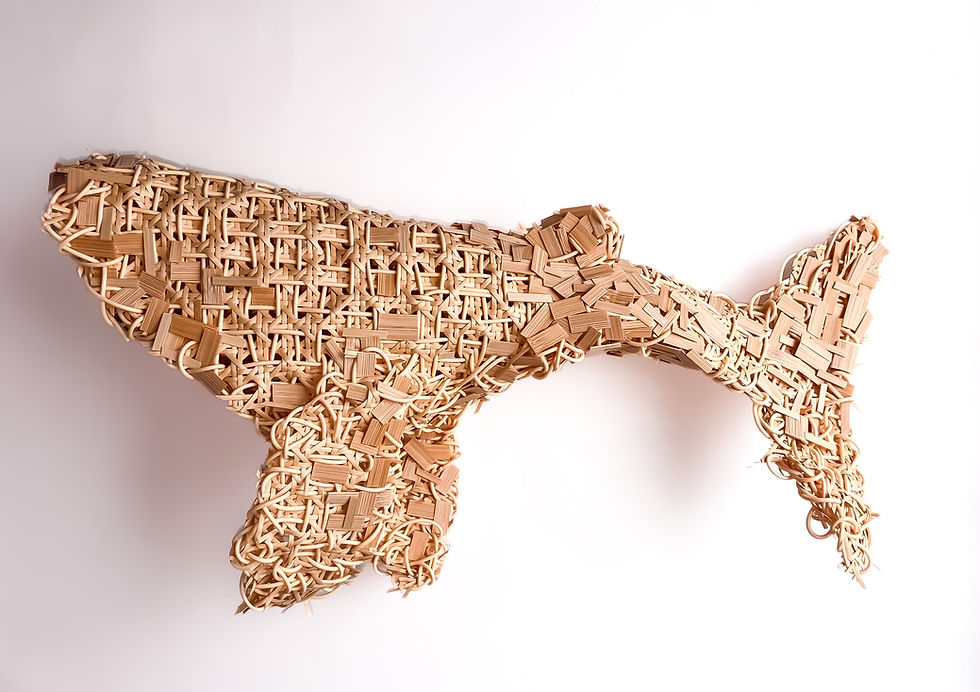
"In the grain of memory" explores the materiality of wood as a living archive, one that holds, releases and reshapes fantasy and memory. Its natural warmth, weight, and grain become central to how fantasy and nostalgia take form. The three wooden clocks: a red panda, a humpback whale, and a leopard seal, treat wood as a surface that can be transformed. Painted and coated, their finishes recall the cherished patina of childhood toys, suggesting that memory can be polished, embellished, and even reconstructed. In their gentle whimsy, these creatures collapse time: they point not only to hours but to the tender slowness of days once experienced more innocently. In contrast, the rattan humpback whale remains raw, woven from strips of wood that reveal the material’s pliancy and breath. Leaving it uncoated allows the viewer to encounter wood in its unmediated form, responsive, porous, and close to nature. Its structure suggests a memory that has not yet been fully shaped, held together by strands of recollection still shifting and settling. Through these works, wood becomes a metaphor for the ways we hold onto the past. Carved, painted, woven, or left untouched, each piece reflects a different mode of remembering: from the brightly held memories we tend to preserve, to the fragile ones that remain incomplete. This series ultimately positions wood as a bridge between the imagined and the experienced, a material that, like memory, carries traces of time while inviting new stories to form.



In our sunset years, 2025
“In our sunset years” investigates a characteristically feminine relationship to the past through the materiality of metal. These sculptural forms take the form of everyday objects found in the 70’s, such as beaded sandals, a coin purse and a vintage satchel, objects that are deeply tied to the personal experiences of femininity. The interweaving of galvanised steel wires with aluminium strips explores subtle shifts in colour and texture. Over time, galvanised wire develops a patina—subtle shifts in colour and texture—as it interacts with the environment, giving it an added layer of time-induced character. This evolving nature of the material parallels the objects’ own relationship to time, personal memory, and the past. Because of its durability and malleability, metal is also imbued with an industrial, utilitarian quality, which is used as a suggestive duality between the call of nostalgia and fleetingness of memory. Additionally, the surface of these individual sculptures is adorned with semi-tropical flora. The transitory nature of flowers—their bloom and eventual decay—mirrors the human experience of beauty as something that is cherished yet inevitably lost. “In our sunset years” is not only an invitation to sentimentality and discussion, but symbolises a wistful desire for a time that may not fully be accessible.

Threads of yesterday, 2025
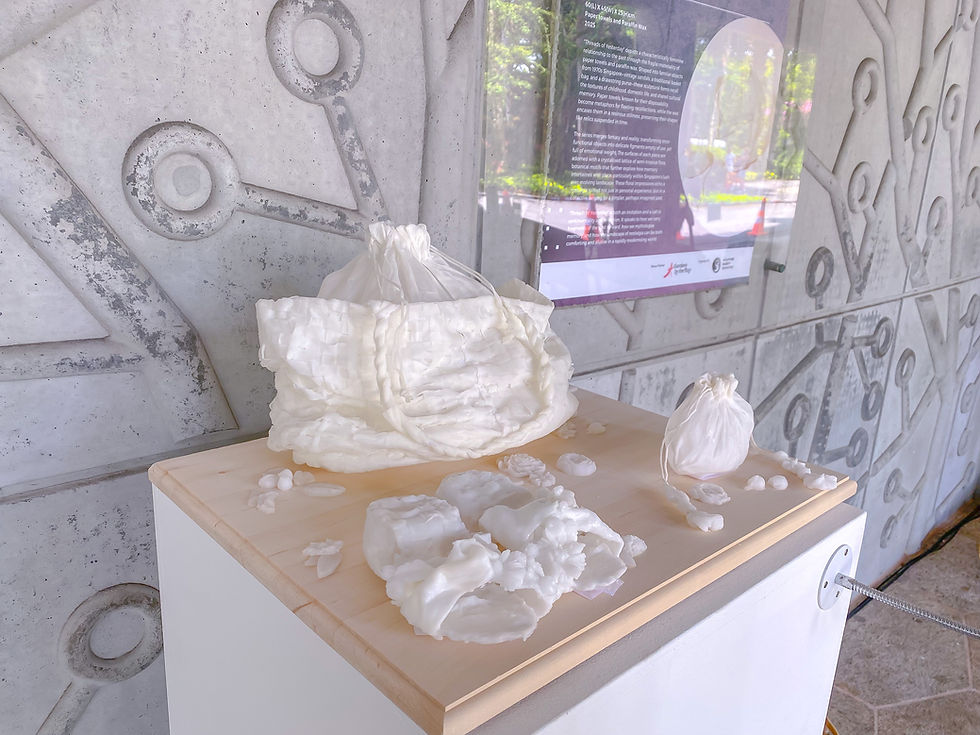
"Threads of Yesterday" depicts a characteristically feminine relationship to the past through the fragile materiality of paper towels and paraffin wax. Shaped into familiar objects from 1970s Singapore—vintage sandals, a traditional basket bag, and a drawstring purse—these sculptural forms recall the textures of childhood, domestic life, and shared cultural memory. Paper towels, known for their disposability, become metaphors for fleeting recollections, while the wax encases them in a resinous stillness, preserving their shapes like relics suspended in time. The series merges fantasy and reality, transforming once-functional objects into delicate figments empty of use, yet full of emotional weight. The surfaces of each piece are adorned with a crystallised lattice of semi-tropical flora, botanical motifs that further explore how memory intertwines with place, particularly within Singapore’s lush, ever-evolving landscape. These floral impressions echo a nostalgia rooted not just in personal experience, but in a collective longing for a simpler, perhaps imagined past. "Threads of Yesterday" is both an invitation and a call to sentimentality and reflection. It speaks to how we carry fragments of the past forward, how we mythologise memory, and how the landscape of nostalgia can be both comforting and elusive in a rapidly modernising world.


Paper Boats of Yesteryears, 2024
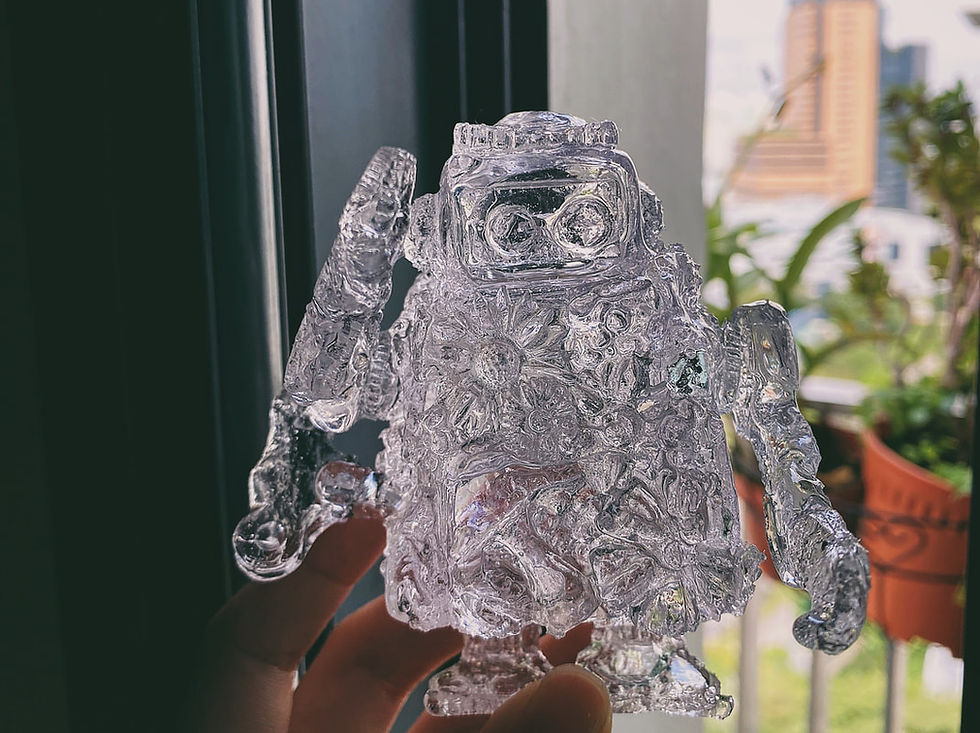
“Paper Boats of Yesteryears” investigates our collective relationship to the past and romanticisation of nostalgia, through the materiality of resin, crystals, wood, clay, marble and found objects. Consequently, these sculptural forms take the form of household objects found in 70’s Singapore, such as retro robot toys, the traditional game of Five Stones, spinning tops and vintage watches, objects that have shaped Singaporeans’ childhoods. Because of its preservative traits, resin is also used as a material to embody a conceptual hook to the past. The series therefore merges fantasy and reality into resinous figments empty of physical function. Additionally, the surface of these individual sculptures is adorned with a crystallised lattice of semi-tropical flora that examines notions of memory and nostalgia within the landscape of Singapore. “Paper Boats of Yesteryears” is not only an invitation to sentimentality and discussion, but symbolizes a wistful desire for a time arguably simpler and bygone.




In search of you, in search of us, 2023
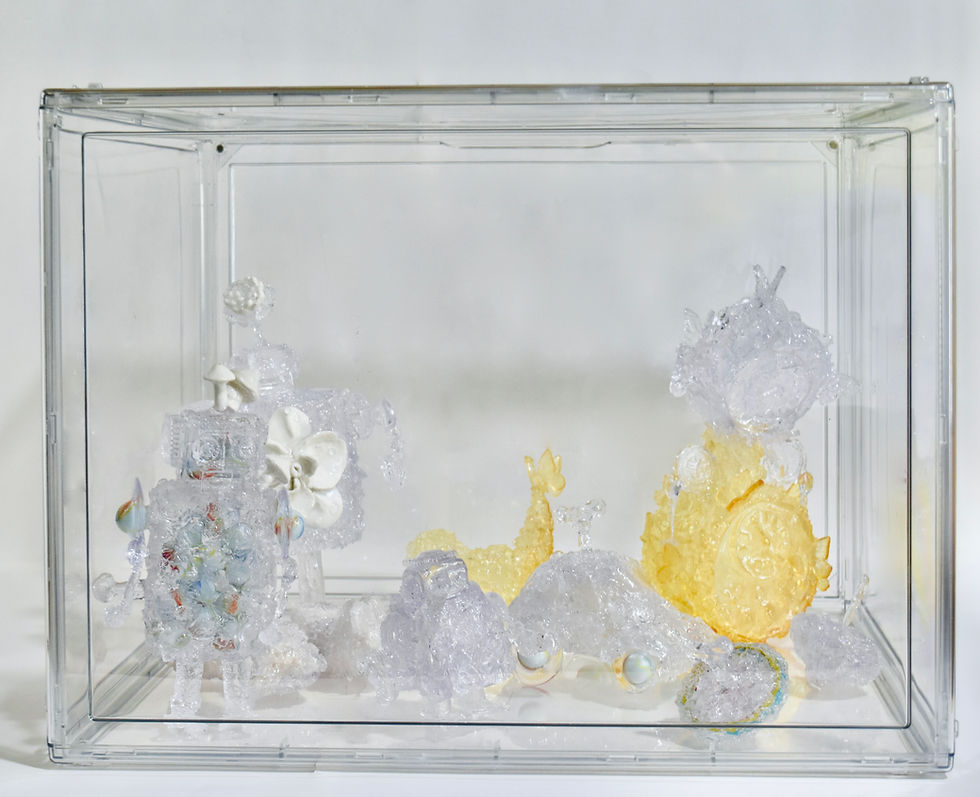
‘In search of you, in search of us’ investigates the regenerative quality of fantasy, its relationship to nostalgia as a visualization of fantasized time
through the materiality of resin, crystals, wood and clay, and its ability to conjure sensation. The work explores the seeking and continuous search for permanence to the impermanence of time, and merges memories of loss with fantasised time as a fragmented dream of what could have been. Acting as a metaphor of the crystallisation of fantasised time, crystallisation is specifically chosen as a process and material for its relationship to time and prolonged duration throughout its formation process. Resin is chosen as a material for its long duration in drying, its relationship with the idea of prolonged waiting and time, along with its encapsulation, preservative quality, translucency, fragility, and ability to shift from liquid to solid state. The fragility and preciousness of fantasised time is symbolised through the use of fabric as a symbol of impermanence and its crystallisation as a form of encapsulation. Wood and clay are specifically chosen as a symbolism of the natural world, and represent an in-between state, between fantasy and reality. The regenerative quality of fantasy is metaphorically symbolised through process of moulding, pinching and casting, where the original form of clay is negated, shaped, and reconstructed to reach a new being. It draws connections in the relationship between crystals, resin, wood and clay to suggest the melancholic fleetingness of a fantasy and the endless search for permanence within the impermanence of existence. The processes and materials construct a phenomenological measure of duration by encapsulating and bonding fragments of my time within the material itself, exploring the physical act of waiting and its metaphorical fragmentation.



To all the dreams we could not be (我们错过的美梦), 2022
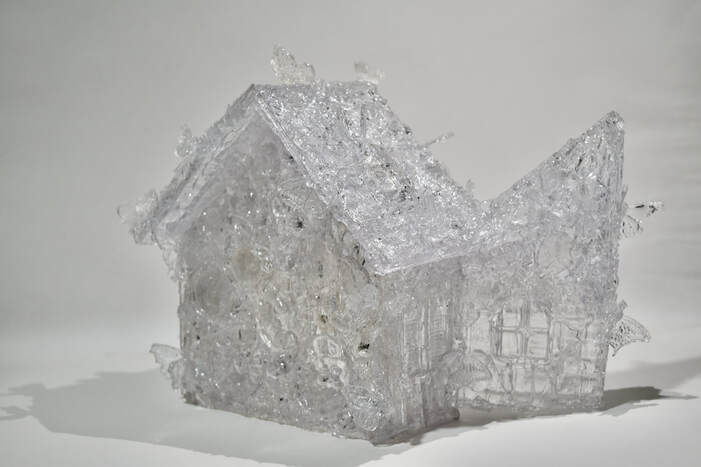
‘To all the dreams we could not be’ investigates the regenerative quality of fantasy, its relationship to nostalgia as a
visualization of fantasized time through the materiality of crystallised resin and fabric, and its ability to conjure sensation.
The work explores the rekindling of memories of loss and its merger with fantasised time as a dream of what could have been.
Acting as a metaphor of the crystallisation of fantasised time, crystallisation is specifically chosen as a process and material
for its relationship to time and prolonged duration throughout its formation process. Resin is chosen as a material for
its long duration in drying, its relationship with the idea of prolonged waiting and time.
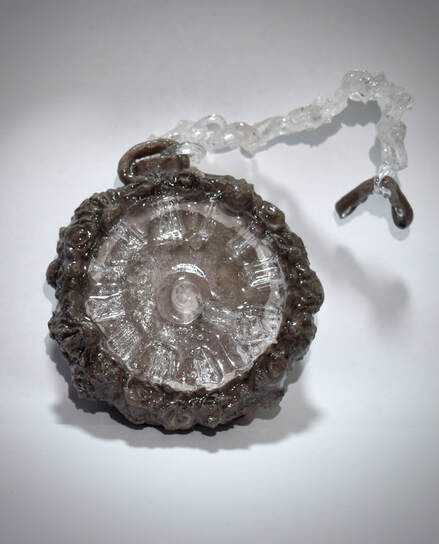
Comprising of sculptural forms that take the form of a tea set, watches and a cuckoo clock, they borrow forms from physical objects,
altering and merging fantasy, fiction and reality into ghostly figments devoid of physical function. The sculptural forms examine the
duality of beautification and lamentation of flights of fancy, drawing reference to its in-between state, between fantasised time
and memory. Containing overlapping details that form a crystallised labyrinth on the surface of the objects, the work probes into
the finality of a fantasised moment and the search for its permanence through the act of encapsulating its motion in time.


In the Silence of Cuckoos, 2021
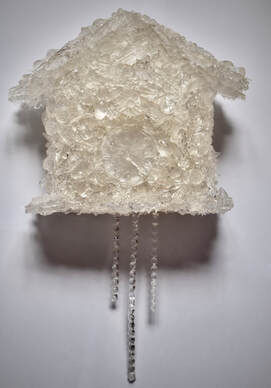
‘In the Silence of Cuckoos’ is a sculpture that investigates the regenerative quality of fantasy, its relationship to nostalgia
as a visualization of fantasized time through the materiality of resin and its ability to conjure sensation. Resin is a material
fundamentally essential because of its existence as a preservative agent, its relationship to the idea of encapsulation, its
translucency, elusive quality, its slowness in drying and its relationship to time. Comprising of overlapping details that form
a labyrinth on the surface of the cuckoo clock, 'In the Silence of Cuckoos’ explores the regenerative quality of fantasy through
the repetition and overlapping of details which represent an encapsulation of fragmented time crystallizing into a labyrinth of
reveries, possessing an ethereal hollowness.


Remember me in your slumber, 2019
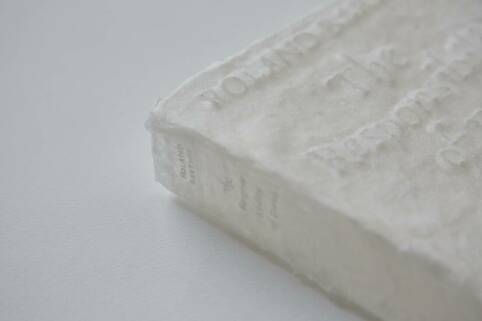
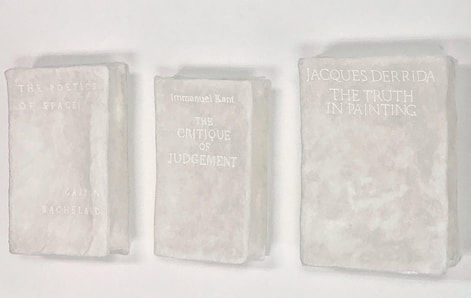
'Remember Me in Your Slumber' is a series of sculptures that explore the endless pursuit of knowledge and its remembrance
as a form of fantasized time and prolonged duration. Comprising of sculptural forms that take the form of books, they borrow
forms from physical books, altering and merging fantasy, fiction and reality into ghostly figments. Made from the fusion
between tissue, paper towels, glue, thread and ink, they draw on the idea of prolonged duration through the process of the
material which involves the act of waiting and the notion of time.


A Graveyard of Yesterdays, 2018
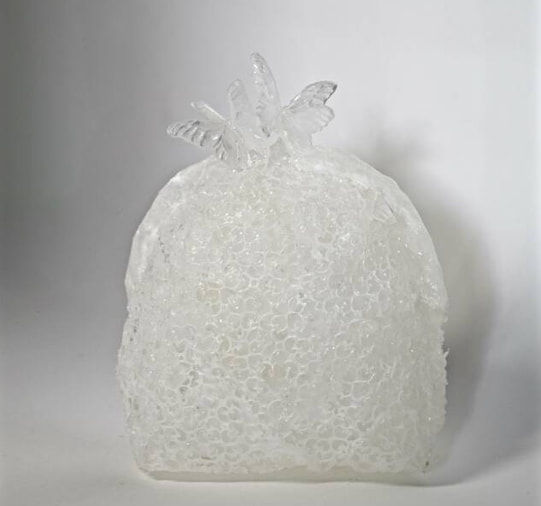
‘A Graveyard of Yesterdays’ is a series of sculptures that investigate the regenerative quality of fantasy, its relationship to
nostalgia as a visualization of fantasized time. Comprising of sculptures that borrow forms from objects of the past,
they alter nostalgic elements into sculptures devoid of physical function. Using repetition and difference, the forms
resemble and differ from the previous, exploring an inability to reconstruct in fullness an account of the past and its
remembrance due to constant progression.



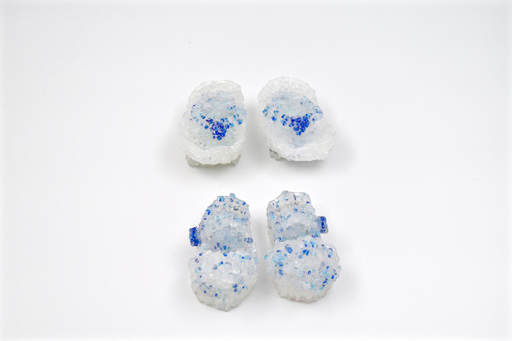
Sentiments (情感), 2017
'Sentiments' is a series of Sculptures that draws a subtle relationship between the fleeting nature of existence
with that of time. Acting as figments of personal objects that the villagers were washing by the river, the series
explores the notion of memory and it's intangibility due to repetition and routines of daily life.
Plastic is a material that is easily disposed of, similar to that of time and memories that pass by fleetingly. Hence,
the series uses the material of plastic as a dimension of memory, fleeting and subtly resisting against loss. The Colour
blue used in the series explores the blue hues of blue china. It thus acts as a reflection of historic symbolism; fusing
history within that of memory.